
Bachelor of Environmental Planning
Our Bachelor of Environmental Planning /BEP is an interdisciplinary, research-led programme that prepares you for a career in urban and environmental planning.
Why study the Bachelor of Environmental Planning?
Accredited by the New Zealand Planning Institute (NZPI), the Bachelor of Environmental Planning recognises that environmental problems and solutions involve social, economic and cultural dimensions as well as the natural and physical environment.
The BEP provides you with practical, industry experience gained across labs, workshops and field trips. You'll also benefit from guest lecturers and practical activities, and will attend industry-focused events such as resource management hearings, case law presentations and mock hearings.
The BEP is a flexible and interdisciplinary degree which provides students with choices in structuring their programme of study. It takes four years to complete and prepares students for a wide range of jobs in New Zealand and overseas.
This four-year degree is divided into three streams:
All students undertake a set of compulsory papers which provides a strong foundation in Environmental Planning. These papers cover topics such as Future Cities, Planning for Environmental Change, Urban Spatial Analysis Environmental Policy and Impact Assessment, Māori Resource Management and professional skills. In addition, students must select a planning stream from three specialist areas:
- Science and the Environment
- Society and the Environment
- Te Ara Taiao: Māori and the Environment
The degree brings together papers from a range of subjects, including Environmental Planning, Environmental Science, Biology, Law, Economics, Māori and Indigenous Studies, Public Policy, Political Science and Geography.
Career opportunities
- Environmental Planner
- City Planner
- Iwi Management Planner
- Policy Analyst or Advisor
- Researcher
- Project Manager
- Resource Consent Planner
- Reserves Planner
- Transport Planner
- Environmental Consultant
- Conservation officer
Degree information
-
Plan your study -
Entry requirements There are five ways you can gain admission to the University of Waikato.
- NCEA University Entrance
- Admission at entrance level
- Discretionary entrance
- University Entrance prior to 2015
- Special admission.
For full details visit Entry Requirements.
To enrol in the BEP, you need University Entrance or equivalent. Some first-year papers may have specific prerequisites. You can check these at papers.waikato.ac.nz. If you do not meet the prerequisites email info@waikato.ac.nz as there may be other pathways you can take.
As an international student studying at undergraduate level, you are required to meet English language and academic entry requirements.
View Entry requirements for undergraduate international students.
-
Fees and scholarships Estimated fees
$8,787 per year
-
Domestic tuition fees
Approximate annual tuition fees and costs for domestic students enrolled in one year of full-time study.
Domestic tuition costs -
Scholarships
Visit our Scholarship finder for more information about possible scholarships.
Scholarships Finder
Relevant as of 08 December 2025.
All amounts are in New Zealand Dollars (NZD). Tuition fees shown are indicative only and may change. There are additional fees and charges related to enrolment. Please see the Table of Fees and Charges for more information. You will be sent an enrolment agreement which will confirm your fees. View information about fees free study.
Estimated fees
$42,230 per year
-
International tuition fees
Approximate annual tuition fees and costs for international students enrolled in one year of full-time study.
International tuition costs -
Scholarships
Visit our Scholarship finder for more information about possible scholarships.
Scholarships Finder
Relevant as of 08 December 2025.
All amounts are in New Zealand Dollars (NZD). Tuition fees shown are indicative only and may change. There are additional fees and charges related to enrolment. Please see the Table of Fees and Charges for more information. You will be sent an enrolment agreement which will confirm your fees.
-
-
Graduate outcomes Graduates of this programme will:- Understand the history and socio-political background of environmental planning in New Zealand and overseas;
- Understand the changing nature of planning including spatial, rural and urban components
- Understand the theories of planning, including theories of planning for sustainability and urban development and growth
- Understand the governance of environmental planning in Aotearoa New Zealand
- Understand the ethical and value dimensions of planning in the context of the Treaty of Waitangi in a multicultural society
- Acquire knowledge, application and evaluation of the appropriate tools and techniques for effective professional planning practice
- Understand the principles of generic planning practice as well as the practices specifically associated with Aotearoa New Zealand’s key planning legislation
- Acquire knowledge of professional planning ethics
- Understand the relationship of Māori and their culture and traditions with their ancestral lands, water, sites, wāhi tapu, and other taonga
- Acquire competency in a range of techniques applicable to planning practice in the workforce; including techniques of community consultation and engagement
- Develop awareness of social justice and ethical issues in relation to planning and resource management
- Develop the ability to evaluate and assess the validity of information presented in scientific and technical reports (from both the natural and social sciences)
- Develop the ability to assemble, evaluate, analyse, assess, and synthesise information from a wide range of disciplines
- Develop the ability to communicate information in a readable and effective way for decision makers
- Acquire competency in effective written and oral communication of information, arguments, and analyses in a variety of forms, to specialist and non-specialist audiences
- Develop the ability to make sound judgements in relation to planning objectives, policies and methods in accord with legal requirements and principles of good planning
- Develop the ability to locate relevant information in a range of contexts (information literacy)
- Develop the ability to work effectively in a team situation
- Develop self-awareness in relation to value judgements and the capacity to accommodate different points of view
- Develop the ability to exercise initiative and personal responsibility
- Develop the capacity for self-direction in tackling and solving problems
- Develop the capacity for autonomous action and initiative in planning and managing tasks
- Acquire academic capacity to undertake appropriate further education and/or training
- Develop the capacity for intellectual judgement, flexibility and adaptability developed by their exposure to rival perspectives, approaches, and theories, and their experience of grappling with open-ended questions, including an appreciation of the uncertainty, ambiguity and limits of knowledge
- Develop the capacity to judge and assess and to integrate knowledge. These attributes equip them to confront a wide variety of unanticipated tasks and situations (in employment and elsewhere); a significant understanding of people and of the conditions, circumstances, structures and dynamics of, and affecting, social and professional interaction
- Develop the capacity for working cooperatively with diverse groups and individuals and contributing effectively to collective projects;
- Develop the ability to determine criteria for evaluating their own and others’ performance in relation to a task

There are five ways you can gain admission to the University of Waikato.
- NCEA University Entrance
- Admission at entrance level
- Discretionary entrance
- University Entrance prior to 2015
- Special admission.
For full details visit Entry Requirements.
To enrol in the BEP, you need University Entrance or equivalent. Some first-year papers may have specific prerequisites. You can check these at papers.waikato.ac.nz. If you do not meet the prerequisites email info@waikato.ac.nz as there may be other pathways you can take.
As an international student studying at undergraduate level, you are required to meet English language and academic entry requirements.
View Entry requirements for undergraduate international students.
Estimated fees
$8,787 per year
-
Domestic tuition fees
Approximate annual tuition fees and costs for domestic students enrolled in one year of full-time study.
Domestic tuition costs -
Scholarships
Visit our Scholarship finder for more information about possible scholarships.
Scholarships Finder
Relevant as of 08 December 2025.
All amounts are in New Zealand Dollars (NZD). Tuition fees shown are indicative only and may change. There are additional fees and charges related to enrolment. Please see the Table of Fees and Charges for more information. You will be sent an enrolment agreement which will confirm your fees. View information about fees free study.
Estimated fees
$42,230 per year
-
International tuition fees
Approximate annual tuition fees and costs for international students enrolled in one year of full-time study.
International tuition costs -
Scholarships
Visit our Scholarship finder for more information about possible scholarships.
Scholarships Finder
Relevant as of 08 December 2025.
All amounts are in New Zealand Dollars (NZD). Tuition fees shown are indicative only and may change. There are additional fees and charges related to enrolment. Please see the Table of Fees and Charges for more information. You will be sent an enrolment agreement which will confirm your fees.
- Understand the history and socio-political background of environmental planning in New Zealand and overseas;
- Understand the changing nature of planning including spatial, rural and urban components
- Understand the theories of planning, including theories of planning for sustainability and urban development and growth
- Understand the governance of environmental planning in Aotearoa New Zealand
- Understand the ethical and value dimensions of planning in the context of the Treaty of Waitangi in a multicultural society
- Acquire knowledge, application and evaluation of the appropriate tools and techniques for effective professional planning practice
- Understand the principles of generic planning practice as well as the practices specifically associated with Aotearoa New Zealand’s key planning legislation
- Acquire knowledge of professional planning ethics
- Understand the relationship of Māori and their culture and traditions with their ancestral lands, water, sites, wāhi tapu, and other taonga
- Acquire competency in a range of techniques applicable to planning practice in the workforce; including techniques of community consultation and engagement
- Develop awareness of social justice and ethical issues in relation to planning and resource management
- Develop the ability to evaluate and assess the validity of information presented in scientific and technical reports (from both the natural and social sciences)
- Develop the ability to assemble, evaluate, analyse, assess, and synthesise information from a wide range of disciplines
- Develop the ability to communicate information in a readable and effective way for decision makers
- Acquire competency in effective written and oral communication of information, arguments, and analyses in a variety of forms, to specialist and non-specialist audiences
- Develop the ability to make sound judgements in relation to planning objectives, policies and methods in accord with legal requirements and principles of good planning
- Develop the ability to locate relevant information in a range of contexts (information literacy)
- Develop the ability to work effectively in a team situation
- Develop self-awareness in relation to value judgements and the capacity to accommodate different points of view
- Develop the ability to exercise initiative and personal responsibility
- Develop the capacity for self-direction in tackling and solving problems
- Develop the capacity for autonomous action and initiative in planning and managing tasks
- Acquire academic capacity to undertake appropriate further education and/or training
- Develop the capacity for intellectual judgement, flexibility and adaptability developed by their exposure to rival perspectives, approaches, and theories, and their experience of grappling with open-ended questions, including an appreciation of the uncertainty, ambiguity and limits of knowledge
- Develop the capacity to judge and assess and to integrate knowledge. These attributes equip them to confront a wide variety of unanticipated tasks and situations (in employment and elsewhere); a significant understanding of people and of the conditions, circumstances, structures and dynamics of, and affecting, social and professional interaction
- Develop the capacity for working cooperatively with diverse groups and individuals and contributing effectively to collective projects;
- Develop the ability to determine criteria for evaluating their own and others’ performance in relation to a task
Why study Environmental Planning at Waikato?
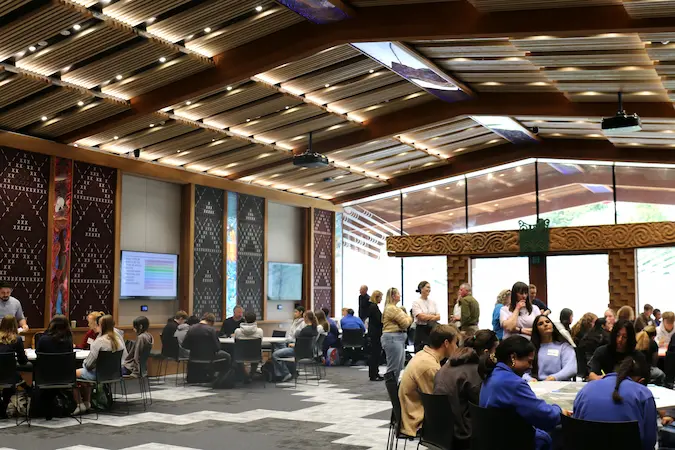
Your Global Career Starts Here
Start your journey with our New Zealand Planning Institute (NZPI) accredited and internationally recognised Environmental Planning degree.

Plan for the Future, Lead the Change
With a unique blend of local-international expertise and Indigenous context, you will graduate with the skills and knowledge to lead environmental change, wherever you are.
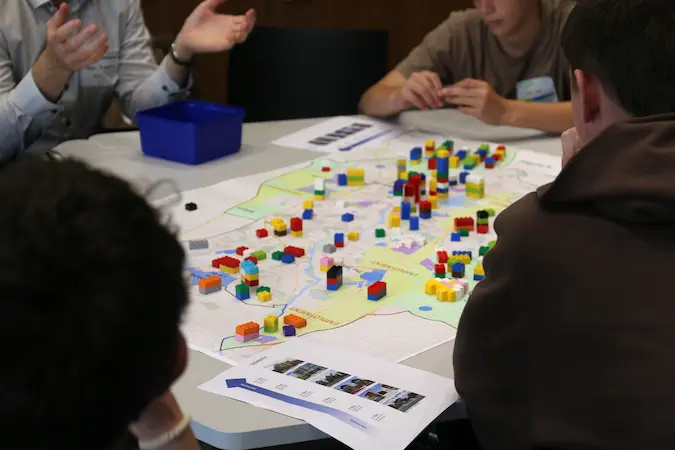
Where Passion Meets Purpose
Tailor your studies to areas like climate change planning, Māori resource management, or urban policy and planning, to drive meaningful outcomes.
Practical experience
Many of the papers offered within the BEP contain opportunities for practical experience including labs, workshops and field trips. You'll also benefit from guest lecturers and practical activities, and will attend industry-focused events such as resource management hearings, urban design evaluations and environmental impact assessment workshops.
As you progress in your programme of study you are expected to undertake a wide range of practical activities as part of your assessments. Preparation of technical reports, GIS applications, resource consent applications, district plans, resource management plans, cultural impact assessments, policy position papers are examples of the intended practical experience component.
What are our students saying
Contact us
International Enquiries